The lack of water in Libreville: Beyond the simple issue of available quantity
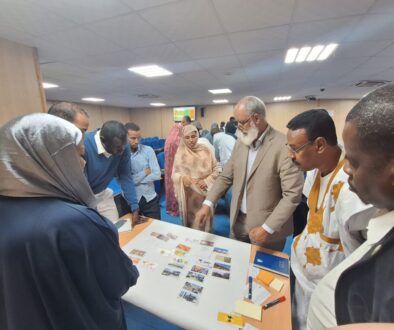
After nine months of studying water supply issues in Greater Libreville, significant results were presented at the final report workshop held on December 5th in Libreville.Phoenix, in collaboration with Cible Etudes and Conseil, was commissioned to conduct a socio-economic study on the problem of water scarcity in Libreville. This study, carried out on behalf of the Integrated Potable Water Supply Program for Greater Libreville (PIAEPAL), aimed to analyze the situation prior to investment projects and works planned by this program.
Libreville faces a problematic water supply: despite a high public service coverage rate, water cuts are widespread:
- only 16% of households subscribed to the public service report 24/7 water supply,
- 75% experience water cuts (ranging from a few hours per week for 9% to several weeks in a row for 10%) and,
- 9% never have water.
The study was based on surveys conducted with 817 households, 76 business operators, 48 schools, 49 health centers, 63 private water vendors, and 5 NGOs working in the water sector. Twelve focus groups were also organized to complement quantitative data with qualitative insights. The surveys covered the four municipalities of Greater Libreville, namely the six districts of Libreville, Akanda, Owendo, and Ntoum.
The preliminary report presented all analyzed data, while the final report drew key lessons, offering a more nuanced and refreshed perspective on the impact of water scarcity.
A new definition of water scarcity
One of the key points of the study was the characterization of water scarcity. How should water shortages be defined? This issue is not limited to the simple question of available quantity but extends to several other factors. Water scarcity is generally perceived from three angles: access (distance to the water point), availability (amount of water available), and stability (temporal variations in supply). However, this study revealed that the reality of water scarcity for households and economic and institutional operators goes beyond these three dimensions.
Access, availability, and stability: interconnected factors
The study helped better understand the relationship between these three criteria:
- Access: While the coverage rate in Libreville is quite widespread, around 90%, it does not alone explain the issue of water scarcity. Indeed:
- Among subscribers to SEEG’s service, 38% of households report experiencing water shortages, confirming that a high coverage rate does not necessarily guarantee sufficient access to water.
- Among non-subscriber households, 53% report a lack of water.
- Availability: The availability of water (the amount available) also does not seem to be the sole explanatory factor for the sense of water scarcity. Indeed, subscribed households who report being affected by the water shortage consume similar amounts of water (from all sources) to those who do not feel impacted. However, the amount of available water is very discriminating for non-subscriber households, between those who feel affected by the water shortage and others.
- Supply Stability: The stability of the water supply proves to be a crucial factor, although this perception varies among households: 54% of households reporting being affected by water shortages, find water cuts unbearable, compared to only 36% of households reporting not being affected. Similarly, the water pressure is perceived more severely by those who consider themselves affected by water shortages.
The weight of palliative strategies reflects households’ experiences
Beyond supply stability issues, the most interesting finding was that households reporting being impacted by water shortages are the ones facing the heaviest daily consequences. Due to frequent cuts and pressure problems, subscribed households are forced to implement palliative strategies, primarily relying on alternative sources of supply, such as wells, tanker trucks, or private water vendors. These solutions are often more expensive and time-consuming, particularly due to additional distances to travel and waiting times.
Another striking result is the emergence of a real private water market, to which consumers are compelled to turn, even though these sources are much more expensive than SEEG’s service. Thus, households most affected by the water crisis are those who feel the impact more intensely due to the financial, logistical, and time burdens of the palliative solutions they must adopt.
Water scarcity through the lens of gender and socio-economic vulnerability
Two other important aspects of the study were the analysis of water scarcity through the lens of gender and socio-economic vulnerability.
- Gender: While men are more often responsible for fetching water, the study highlighted the specific role of women, both inside and outside the household, in water management. It also addressed the particular situation of households headed by women (213 households).
- Socio-Economic Vulnerability: An analysis was conducted on vulnerable households, defined by their belonging to the first and second income quintiles, including the elderly and dependent children (287 households). These households face greater difficulties in accessing potable water due to their limited resources.
In conclusion, this study highlights the complexity of water scarcity in Libreville, emphasizing the need to improve public service.