Development of the national Policy and Strategy for household waste management in Cameroon
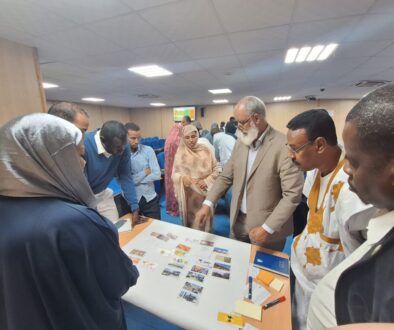
The kick-off meeting marking the official launch of the development of the National Policy and Strategy for Household Waste Management was held in Yaoundé on Tuesday, September 16.
This mission, entrusted by Expertise France to Phoenix in a consortium with SETEC EE and 2N Group, aims to provide Cameroon with a coherent and operational political and strategic framework for household waste management. It is being steered by a working group composed of representatives from the ministries responsible for housing and urban development (MINHDU), decentralization and local development (MINDDEVEL), and the environment and sustainable development (MINEPDED).
It is part of the “Cameroon, Green, Inclusive, and Sustainable Cities” program funded by the European Union and directly contributes to Strategic Objective 1 of the Cameroon Urban Program (CUP), which aims to improve public land-use planning policies and strengthen urban governance in the context of decentralization.
Cameroon is experiencing rapid urbanization: nearly 60% of the population currently lives in cities, a figure expected to reach 70% by 2050. This rapid growth and changing consumption habits are leading to a significant increase in waste production, estimated at more than six million tons per year, even though management infrastructure remains limited and institutional coordination remains insufficient. Collection and treatment practices still rely largely on the informal sector, generating hygiene, sanitation, and public health problems.
The National Urban Planning Forum (Etats Généraux), held in May 2025, has already highlighted several shortcomings, including the lack of a structuring political framework, the absence of an updated national strategy, the weak coherence between urban planning, the environment, and the circular economy, as well as reduced capacities at the level of decentralized local authorities. Public awareness is also limited, which hinders the implementation of sustainable waste management.
The development of a National Policy and Strategy for Household Waste Management is the first step in addressing these challenges. These documents will be accompanied by a budgeted action plan, a communication and advocacy mechanism to ensure effective implementation and ownership by all stakeholders. Our consortium’s work will focus on updating the sectoral diagnosis, identifying the root causes of institutional and financial dysfunctions, defining strategic objectives, and planning the resources to be mobilized.
The scope of the mission covers the entire national territory and focuses specifically on household and similar waste. The intervention takes into account urban, peri-urban and rural contexts, integrating the realities of major metropolitan areas, secondary towns and smaller settlements, while respecting the responsibilities delegated to the Decentralized Territorial Communities (CTD).