Ensuring demand for the sustainable electrification of the DRC
In the Democratic Republic of the Congo, access to electricity remains very limited. In 2024, only 22.5% of the country’s population had access to electricity, one of the lowest rates in Africa. Mini-grid development is one of the solutions being deployed to improve access to the service.
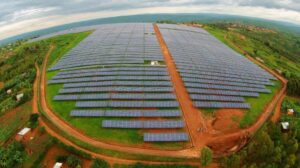
In 2021, the Moyi Power consortium was awarded the concession for a hybrid solar mini-grid in the towns of Gemena, Isiro and Bumba, set to serve 1.5 million people over the 20-year contract term. The project is also betting on electric cooking (e-cooking) to replace charcoal.
However, projects of this kind face a risk that deters investors: what if consumption falls short of forecasts ?
To mitigate this risk, the World Bank is setting up a Demand Risk Instrument (DRI). This demand guarantee mechanism is funded with USD 30 million from the Green Climate Fund, under the SRMI initiative and the AGREE project.
The guarantee is designed to cover the gap between a minimum revenue threshold and actual revenue during the first 7 years of operation.
The mechanism reassures lenders, lowers the cost of financing and allows power plants to be better sized for future demand. The end result: more affordable tariffs for users.
The entire guarantee therefore rests on the robustness of the demand projections. Alongside Artelia, Phœnix was selected by the World Bank to independently verify and simulate the demand scenarios.
Our assignment involved:
- analysing the operator’s projection methodology and the field surveys on which it is based (expressed demand, willingness to pay, customer segmentation, e-cooking uptake);
- benchmarking these projections against similar projects in comparable regions or countries;
- identifying demand scenarios that could trigger the guarantee without valid grounds, and recommending adjustments to calibrate it fairly and prudently.
A concrete example of how climate finance can unlock private investment in energy access.